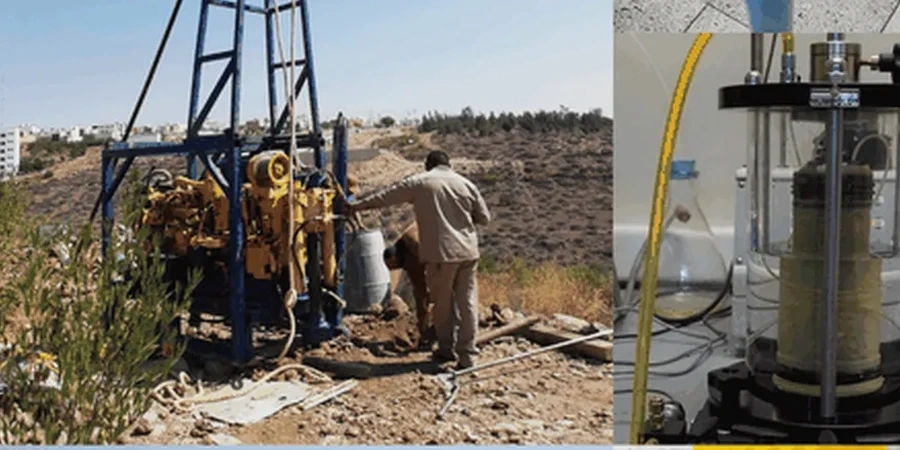
The Jackson metropolitan area sits atop the Jackson Dome, a buried structural high that influenced deposition of the Cockfield and Sparta formations. These Eocene-age units include loose, poorly graded sands that are notorious for settlement under structural loads. When the Yazoo Clay weathers and desiccates during Mississippi's dry autumns, the upper sands lose confinement, and vibrocompaction becomes more than a soil improvement technique—it becomes a necessity. Our design process correlates SPT N-values from ASTM D1586 borings with target relative density, then specifies vibrator type, spacing, and duration. For projects near the Pearl River floodplain where alluvial sands reach 20 feet in thickness, we often integrate a CPT verification program to confirm that the design achieves 70 percent relative density or better before foundation construction begins.
A properly designed vibrocompaction program in Jackson's Terrace Deposits can reduce post-construction settlement by 50 to 80 percent compared to untreated loose sand.
Quick answers
What does vibrocompaction design cost for a typical commercial lot in Jackson?
For a commercial building footprint up to 10,000 square feet in the Jackson metro area, design fees range from US$1,270 to US$5,440 depending on the number of borings, depth of treatment, and whether a test section with instrumented CPT verification is included. Complex sites with high silt content or variable groundwater require more analytical effort and fall toward the upper end of the range.
How do you determine if vibrocompaction is feasible in Jackson's soils?
Feasibility depends primarily on the fines content passing the No. 200 sieve. We sample the target sand layer during SPT drilling and run wash-sieved gradations per ASTM D2487. If fines are below 12 percent, vibrocompaction is highly effective; between 12 and 20 percent, we may recommend a test section to confirm radius of influence. Above 20 percent fines, alternative methods like stone columns typically perform better.
What verification testing is required after vibrocompaction?
The IBC and our design specifications require post-treatment CPT soundings at a frequency of at least one sounding per 2,000 square feet of treated area, positioned at the centroid of probe grids. We compare pre- and post-CPT tip resistance and sleeve friction to confirm the target relative density has been achieved throughout the full treatment depth. Settlement monitoring with deep benchmarks may also be specified for critical structures.