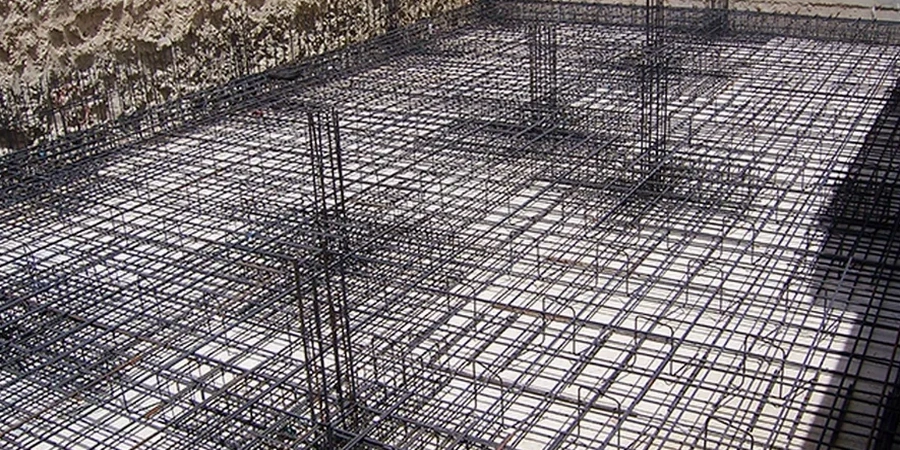
Jackson's expansion along the Pearl River floodplain and its weathered terraces has always presented a unique challenge for foundation engineers. The city's structural growth, from early 20th-century downtown buildings to modern subdivisions in Madison County, rests on the complex behavior of the Yazoo Formation—a high-plasticity clay that swells and shrinks dramatically with moisture variation. In our experience across the Jackson metro, a conventional shallow footing often becomes a long-term liability in these expansive soils, leading to differential movement and structural distress. This is precisely where a properly designed raft or mat foundation changes the equation. By integrating the results from a detailed CPT test to profile continuous stratigraphy, we can model the soil-structure interaction and design a mat that bridges soft spots, distributing loads evenly and mitigating the effects of uneven heave. It is not merely a foundation slab; it is a structural response to the geology of central Mississippi.
In central Mississippi, a mat foundation is not just a concrete slab—it is a carefully engineered raft designed to navigate the expansive pressures of the Yazoo clay.
Local geotechnical context
The International Building Code (IBC), adopted by the City of Jackson, mandates a site-specific geotechnical investigation for all new construction, a requirement that becomes particularly critical in this region due to the expansive nature of the Yazoo Formation. The primary risk we observe in Jackson is not just settlement, but differential heave. When a rigid structure is founded on a soil that can exert swell pressures exceeding 5,000 psf, the perimeter of the mat can lift while the interior remains stable—or vice versa—leading to severe cracking in masonry walls and distortion of door frames. A poorly executed or generalized design that ignores the micro-variations in soil moisture across the building footprint invites litigation and costly remediation. Our practice focuses on quantifying the Potential Vertical Rise (PVR) through suction measurements and consolidometer swell tests, modeling the mat as a post-tensioned or conventionally reinforced stiffened slab on a compressible medium to ensure that the angular distortion between any two points remains within tolerable limits throughout the structure's service life.
Quick answers
What makes raft/mat foundation design in Jackson, MS, different from other regions?
The dominant factor is the Yazoo clay, a high-plasticity, overconsolidated formation that undergoes significant volume changes with seasonal moisture fluctuation. In Jackson, we are not primarily designing for settlement in soft soils, but for heave and shrinkage. The design must follow the Post-Tensioning Institute (PTI) method for expansive soils, modeling the mat as a stiffened raft that bridges the active moisture variation zone, which typically extends to a depth of 8 to 12 feet in this climate.
What is the typical cost range for a mat foundation design in the Jackson area?
The engineering fee for a complete raft/mat foundation design in Jackson, including the required geotechnical investigation, laboratory swell testing, and structural drawings, generally ranges from US$1,050 to US$4,140. The final cost depends on the complexity of the soil profile, the size of the structure, and the level of post-tensioning analysis required to meet the PTI standard for expansive soils.
Can a mat foundation be designed for a site with active slope movement in Jackson?
A conventional mat foundation is not suitable for active landslides. However, in Jackson's hilly northeastern areas where creep is suspected, we integrate the mat design with a global slope stability analysis. If movement is shallow, the mat can be combined with deep foundations like piers socketed into the stable, unweathered clay below the creep zone. The design must demonstrate that the mat can resist the lateral earth pressures and differential movements imposed by the unstable mass.
How deep should the geotechnical borings be for a mat foundation in Jackson?
Per the IBC and our standard of practice in central Mississippi, borings should extend to a depth where the net stress increase from the mat is less than 10% of the existing effective overburden pressure, and they must fully penetrate the active zone of the Yazoo Formation. In Jackson, this typically requires borings to a minimum depth of 15 to 20 feet below the planned bottom of the mat, with continuous sampling to capture the transition from the weathered, fissured clay to the more competent, unweathered material below.