← Home · Slopes & Walls

Retaining Wall Design in Jackson MS: Geotechnical Logic for the Yazoo Clay Region

Together, we solve the challenges of tomorrow.

LEARN MORE →

A contractor near the Pearl River called us after a block wall tilted 11 inches in three weeks. The backfill was clean crushed limestone. The problem was the foundation clay. Jackson sits on the Yazoo Formation. This overconsolidated clay loses strength fast when it gets wet. Standard bearing pressure assumptions from the IBC tables do not hold here. A retaining wall design in Jackson must start with the residual shear strength of the native material. We sample by SPT and thin-wall Shelby tubes. We run consolidated-undrained triaxial tests. Then we check global stability, sliding, and overturning. For deeper cuts along I-55, we often combine the CPT test to map the clay consistency with depth and the slope stability analysis to verify that the wall does not fail on a deep-seated circle through the formation.

Residual friction angle of the Yazoo clay governs the base width of a retaining wall in Jackson, not the peak strength.

How we work

We see three failure patterns repeat across Jackson projects. First, base sliding on a slickensided clay surface. Residual friction angle can drop below 12 degrees. Second, overturning when the footing is too narrow for the backslope. Third, global instability through the foundation soil. A retaining wall design in Jackson needs a shear key dimensioned for the residual strength. We cut the key at least 0.3 meters into intact Yazoo clay. Reinforcement is always Grade 60 deformed bars. Concrete is 28 MPa minimum. Backfill within 1 meter of the wall is free-draining granular material. We compact in 150 mm lifts to 95% of standard Proctor. The stone columns technique helps under the footing when the clay is too soft below 3 meters. For tall walls over 4 meters, we run a staged construction analysis in GeoStudio. The instrumentation plan includes inclinometer casings and survey monuments. Monitoring continues for 6 months after backfill placement.
Retaining Wall Design in Jackson MS: Geotechnical Logic for the Yazoo Clay Region
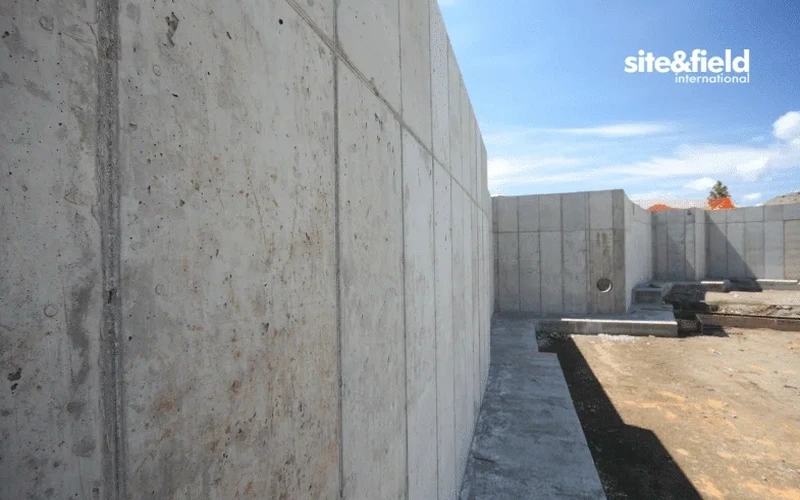
Technical reference image — Jackson Mississippi

Local geotechnical context

Jackson's average elevation is 85 meters. That modest number hides a serious geotechnical risk. The Yazoo clay shrinks and swells with seasonal moisture. A 2019 study by the Mississippi Department of Environmental Quality mapped expansive soil zones across Hinds County. Volume change can add 15 to 25 kPa of lateral pressure against a wall. Add poor drainage from heavy summer storms. Pore pressure builds behind the stem. We design for the drained and undrained case. ASCE 7-22 Section 3.2 requires checking both. A retaining wall design in Jackson that ignores swell pressure will crack at the cold joint. We specify filter fabric, a clean drainage aggregate, and a weep hole spacing of 1.5 meters or less. The wall must breathe. Otherwise the clay wins.

Need a geotechnical assessment?

Reply within 24h.

Email: contact@geotechnical-engineering1.org

Technical parameters

ParameterTypical value
Design life (IBC Table 1604.5)50 years for standard walls
Minimum base width for cantilever wall0.6 × retained height (Yazoo clay)
Shear key depth into intact clay≥ 300 mm
Backfill friction angle (granular)34° to 38° (clean crushed stone)
Concrete compressive strength28 MPa (4,000 psi) minimum
Reinforcement yield strengthGrade 60 (414 MPa)
Weep hole spacing≤ 1.5 m center-to-center
Global FoS (static, drained)≥ 1.5 per ASCE 7-22

Related services

01

Geotechnical Investigation for Wall Foundations

SPT borings and Shelby tube sampling in the Yazoo Formation. Laboratory testing for residual shear strength, swell pressure, and consolidation parameters.

02

Structural Design and Stability Analysis

Limit equilibrium analysis for sliding, overturning, and bearing capacity. Reinforcement detailing per ACI 318. Global stability checks with Slope/W.

03

Construction-Phase Monitoring

Inclinometer installation behind the wall stem. Settlement monitoring on the backfill surface. Weekly reports during the first 3 months after construction.

Relevant standards

ASCE 7-22 Minimum Design Loads, IBC 2021 Chapter 18 Soils and Foundations, ASTM D1586 Standard Penetration Test (SPT), ASTM D4767 Consolidated-Undrained Triaxial Compression Test, AASHTO LRFD Bridge Design Specifications (for MSE walls)

Quick answers

What is the typical cost for a retaining wall design in Jackson Mississippi?

Fees for a retaining wall design in Jackson usually fall between US$1,000 and US$4,610. The range depends on wall height, whether global stability analysis is required, and the number of borings needed to characterize the Yazoo clay. A simple gravity wall under 1.5 meters costs less. A 5-meter cantilever wall with a shear key and instrumentation pushes toward the upper end.

Which load combinations control the design of a retaining wall in Jackson?

ASCE 7-22 governs. We check the drained long-term condition with full hydrostatic pressure when the weep holes clog. We also check the undrained short-term condition right after backfill placement. For walls supporting structures, we add the seismic load combination from IBC Section 1605. The Yazoo clay requires special attention to swell pressure as a lateral earth pressure component.

How deep should the footing be for a retaining wall on Yazoo clay?

The minimum embedment is 900 mm below finish grade to get below the active moisture zone. The footing must sit on intact clay, not on fill or desiccated crust. We specify a mud mat of lean concrete if the excavation base gets wet before pouring. The shear key extends at least 300 mm deeper into undisturbed Yazoo formation material.
Location and service area

We serve projects in Jackson Mississippi and surrounding areas.

View larger map