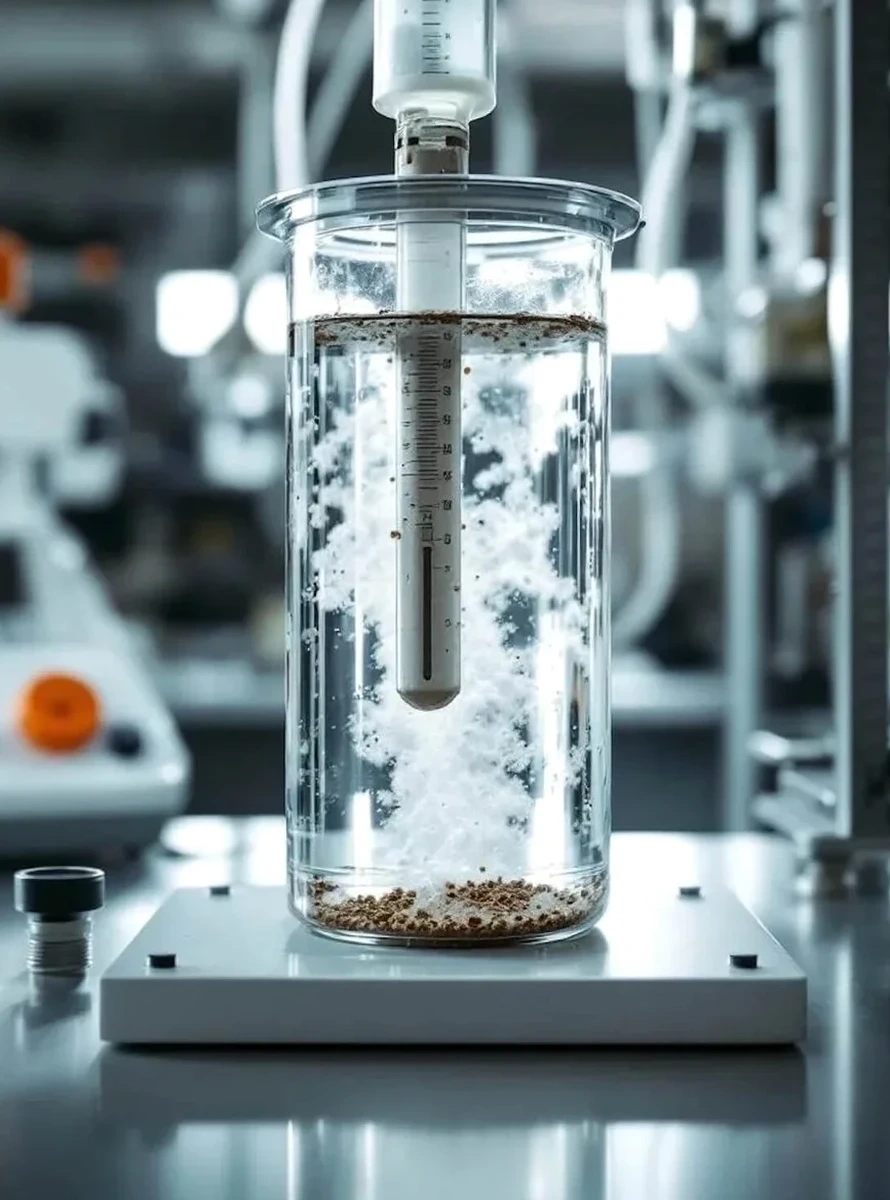
Jackson's development along the Pearl River and atop the distinctive Yazoo Clay formation has shaped every foundation decision in the capital city. The older neighborhoods of Belhaven and Fondren sit on loess-capped terraces that look stable until a grain size distribution test reveals the silt collapse potential underneath. Downtown Jackson, rebuilt through decades of urban renewal, rests on alluvial soils where the proportion of fines to coarse material dictates drainage behavior and bearing capacity. Our grain size analysis service combines mechanical sieving for particles retained on the No. 200 sieve with hydrometer sedimentation for the silt and clay fraction, giving engineers in Jackson the complete particle-size curve that ASTM D2487 requires for Unified Soil Classification. Before a single footing is dimensioned in Hinds County, understanding whether the subgrade is a well-graded gravel or a fat clay with high plasticity changes everything about the project's cost and timeline.
In Jackson, the difference between a lean clay and a fat clay on the gradation report can shift a foundation design from spread footings to deep piles—the hydrometer curve tells that story.
Local geotechnical context
A four-story mixed-use building on State Street started excavation in late summer when the Yazoo clay was dry and stiff. The preliminary geotech report relied on visual classification and a handful of pocket penetrometer readings, classifying the material as low-plasticity silt. By December, after a wet Jackson winter, the exposed subgrade had softened to a workability nightmare—footings were pumping water, and the structural engineer had to redesign for a bearing capacity half of what was originally assumed. A complete grain size analysis with hydrometer would have caught the true clay fraction in August, flagged the soil as high-plasticity CH material, and triggered the necessary foundation adjustments before concrete was poured. The cost of that one lab test would have been roughly the price of a single ready-mix truck, compared to the six-figure change order and two-month delay the owner absorbed. For any Jackson site within the Yazoo Clay belt—which covers most of the metro area—skipping the hydrometer portion of the gradation test is a gamble on moisture conditions that change drastically between October and April.
Quick answers
Why does Jackson's Yazoo Clay require hydrometer testing instead of just a sieve analysis?
Yazoo Clay typically has 60 to 95 percent of its particles passing the No. 200 sieve, meaning a mechanical sieve stack captures only the minor sand fraction. The hydrometer test measures the silt-versus-clay split within that fine fraction, which controls the soil's shrink-swell behavior, drainage characteristics, and effective friction angle. Without hydrometer data, a high-plasticity CH clay can be mistaken for a low-plasticity silt, leading to undersized footings and long-term differential settlement in Jackson's seasonal wet-dry cycles.
How much soil sample do you need for a complete grain size analysis on a Jackson project?
For soils primarily passing the No. 10 sieve—typical of Jackson's clay and silt deposits—we require approximately 150 grams of oven-dried material. For sandy terrace deposits or granular borrow sources, we need about 500 grams to ensure the coarse fraction is statistically representative. We provide sampling jars and instructions, and our team can coordinate with the drilling crew on-site to collect undisturbed or bag samples at the specified depths.
What does a grain size analysis cost for a typical Jackson residential or commercial site?
A combined sieve and hydrometer analysis generally runs between US$100 and US$180 per sample, depending on whether Atterberg limits are included in the same testing package. Most Jackson projects require two to four samples taken at different depths, and we offer volume pricing for multi-sample geotechnical investigation programs.
How long does the grain size lab turnaround take in Jackson?
Standard turnaround is three to five business days from sample receipt. The hydrometer portion requires a minimum 24-hour sedimentation period with readings taken at precise time intervals, plus oven-drying and data reduction. Expedited two-day service is available for construction-phase testing where earthwork compaction or foundation subgrade approval is waiting on classification results.